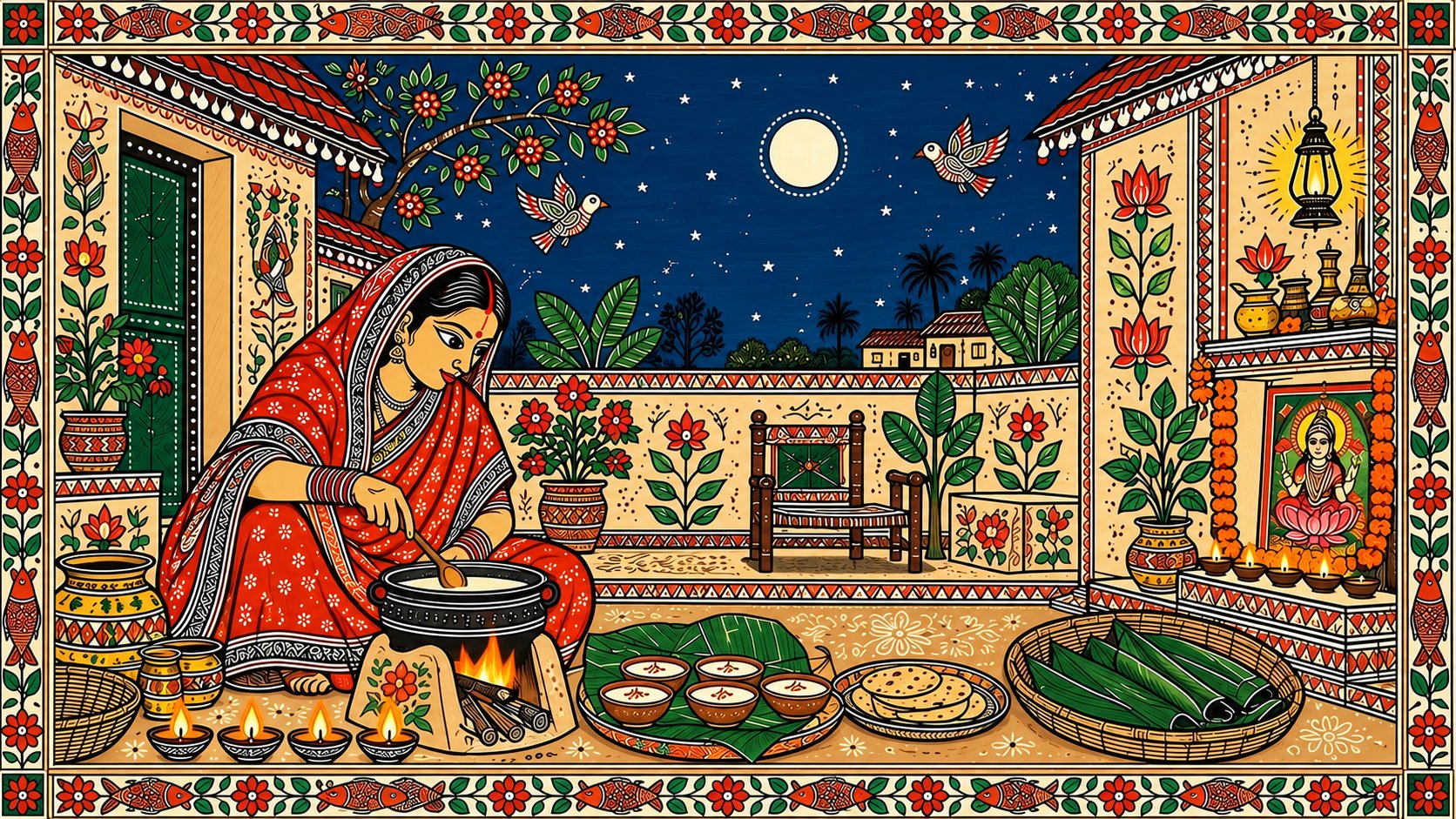
Kharna, also called Lohanda in some accounts, is the second day of Chhath Puja. The vratin observes a day-long fast and prepares for an evening worship in which simple prasad is offered and then shared.
A day of restraint
The quiet character of Kharna comes from restraint. Bihar Tourism describes a day-long fast that is broken in the late evening after worship. Once the Kharna prasad has been taken, the more demanding phase of the vrat continues toward the morning offering on the fourth day.
Household members help keep the cooking space ready, receive visitors and organise what will be carried to the ghat the next day. This support allows the vratin to remain focused on the observance.
The evening worship
The worship takes place after the day’s fast. Lamps, the warmth of the cooking fire and the aroma of freshly prepared prasad give Kharna its intimate atmosphere. Families may follow different inherited procedures, so a general online description should not replace the guidance of elders or the person keeping the vrat.
Prasad is first offered and then distributed. The sharing is important: relatives and neighbours receive it with respect, while the household begins preparing for the next day’s journey to the water.
Kheer, roti and simplicity
Official Bihar sources describe Kharna prasad as rice pudding prepared with jaggery and milk, accompanied in many households by roti. The ingredients and method remain intentionally simple. Clean vessels and careful preparation are treated as part of the observance itself.
Because practices vary, claims that every household uses exactly the same recipe should be treated cautiously. What is shared is the emphasis on purity, restraint and prasad prepared for worship rather than display.
From the courtyard to the ghat
Kharna leads into Sandhya Arghya. On day three, baskets are arranged, songs accompany the procession and devotees gather to offer arghya to the setting sun.