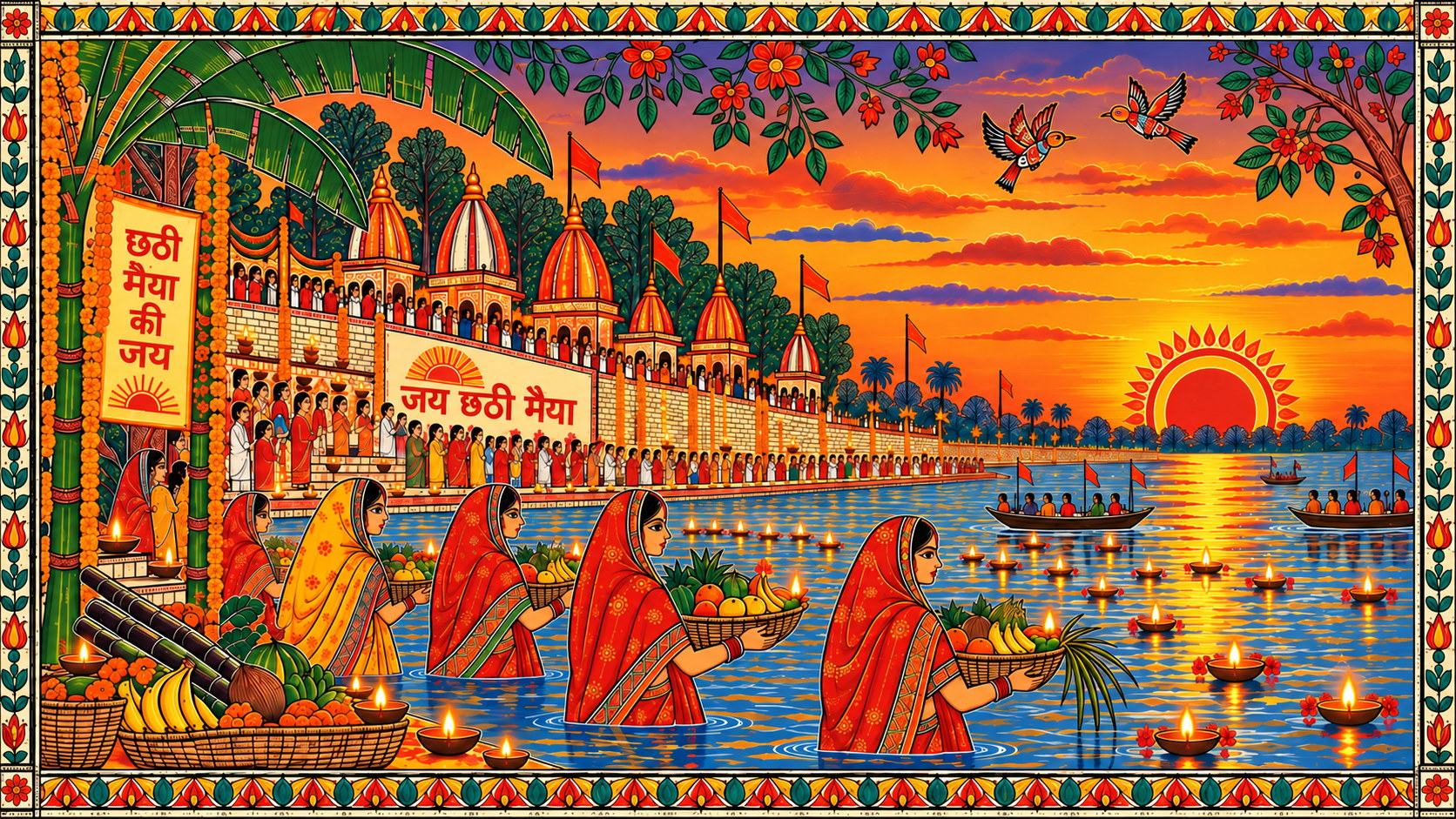
Chhath Puja is a four-day Hindu observance dedicated to Surya, the sun, and closely associated with Chhathi Maiya. It is especially important in Bihar and is also observed across eastern Uttar Pradesh, Jharkhand, Nepal and communities that have carried the tradition to other parts of the world.
The festival is often called Chhath Mahaparv. Its public image is unforgettable: bamboo baskets of fruit and prasad, sugarcane, lamps, folk songs and rows of devotees standing in water. Its deeper rhythm begins earlier, through cleaning, careful food preparation, fasting and cooperation across the household and neighbourhood.
Chhath honours both the setting sun and the rising sun, joining an evening of gratitude with a morning of renewal.
The four days of Chhath
The Kartik observance unfolds as one connected sequence. Each day prepares for the next, so the festival is best understood as a journey rather than four separate events.
Ritual bathing, a cleaned home and a simple meal begin the observance.
DAY TWOKharnaA day-long fast closes with worship and shared prasad in the evening.
DAY THREESandhya ArghyaDevotees gather at the ghat to offer arghya to the setting sun.
DAY FOURUsha ArghyaThe final offering welcomes the rising sun before the fast is concluded.
Why are the setting and rising sun worshipped?
Official Bihar Tourism and Incredible India accounts describe Chhath as an expression of reverence for the sun as a source of life, energy and well-being. The evening arghya faces the setting sun; the next morning’s arghya faces the rising sun. Together, the two offerings give the festival its distinctive arc from dusk to dawn.
The observance places people directly in relation to natural cycles. Water, sunlight, seasonal produce and handmade offerings are not scenery around the ritual. They are part of its language. This relationship also explains the care given to ghats, water bodies, kitchens, vessels and the route followed by devotees.
Preparation, prasad and the soop
Preparation is shared across families and neighbourhoods. Bamboo soop and daura hold fruits, sugarcane, coconuts and prepared prasad. Thekua, made from wheat flour with jaggery or sugar and ghee, is widely associated with the evening and morning offerings. Kharna has its own simple prasad, commonly including jaggery kheer and roti.
Practices vary by household and region. The meaning of a particular item is best learned from the family or community observing the vrat. The common principle is disciplined preparation and respect for the purity of the food and space used for worship.
Songs, memory and community
Chhath geet accompany preparation, the journey to the ghat and the offerings themselves. Bihar Tourism notes that folk songs carry the culture and history of Bihar through the festival. Their familiar melodies also connect people living away from home to the language and memories of the observance.
Our Chhath Puja songs guide introduces the verified recordings used by this site. The immersive Chhath Puja Vibes experience pairs those songs with four illustrated festival scenes.
Observing with respect
Visitors should treat the ghat as a place of worship. Keep pathways clear, avoid interrupting people during arghya, follow local safety instructions and ask before photographing individuals at close range. The festival belongs first to the people undertaking the vrat and the families supporting them.