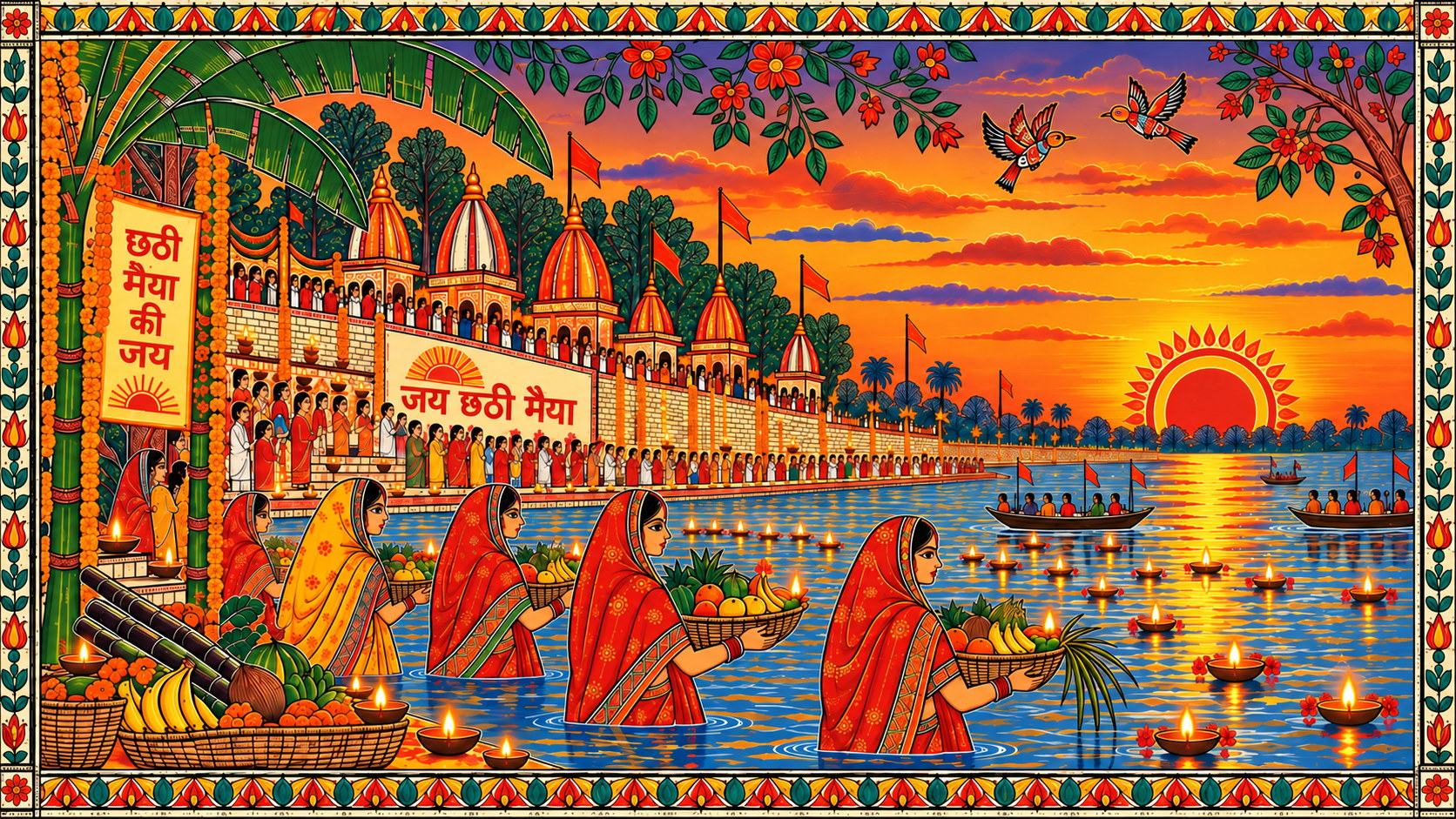
Sandhya Arghya is the evening offering made to the setting sun on the third day of Chhath Puja. It is the festival’s most visible public gathering, but it rests on the quieter discipline of Nahay Khay, Kharna and many hours of preparation.
Gratitude at sunset
Chhath is distinctive for honouring the setting sun before returning to honour the rising sun. The evening offering expresses gratitude at the close of the day. Devotees stand in water while arghya is offered, surrounded by family members who carry baskets and help maintain the worship space.
The sunset itself is not treated as a backdrop for performance. It provides the natural moment around which the ritual is organised.
The journey to the ghat
Families travel to a riverbank, pond or other prepared water body with bamboo baskets holding prasad and seasonal produce. Community work becomes visible along the route and at the ghat: paths are cleaned, lamps are arranged, volunteers guide people and relatives support the vratin.
Official descriptions also note the Kosi observance on the third night, in which lamps and baskets of prasad are arranged beneath a canopy formed with sugarcane. The form and timing can vary, and local family practice remains the best guide.
Soop, fruit, thekua and Chhath geet
The offering baskets commonly include fruit, coconut, sugarcane and prepared prasad. Thekua is strongly associated with both the evening and morning arghya. Every item is handled with care because it belongs to the worship.
Chhath geet accompany preparation and the gathering at the water. They carry familiar invocations, images of the ghat and the emotional pull of home. This site presents credited recordings without reproducing lyrics.
Waiting for first light
Sandhya Arghya does not close the festival. Devotees return before dawn for Usha Arghya, completing the paired worship of setting and rising sunlight.